Bail Pola in Maharashtra: Bullock Worship and Village Traditions
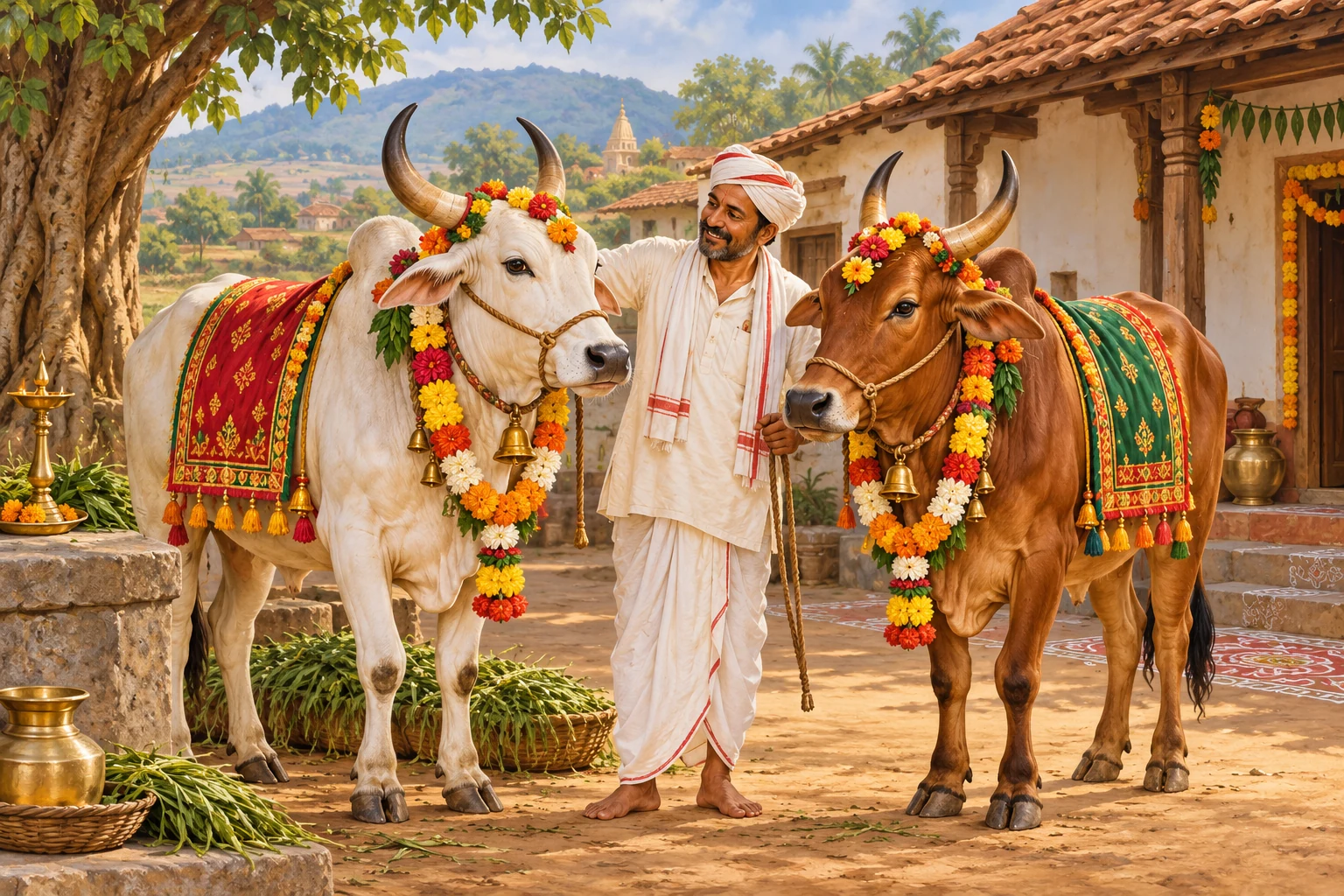
Bail Pola (बैल पोळा) is a festival of appreciation for the bullocks associated with agricultural work. In rural Maharashtra, its familiar scenes include cleaned and decorated animals, household aarti and village gatherings. The celebration makes the working animal visible at the centre of the occasion. For a family taking part, preparations should begin with the animal’s comfort and the village’s actual custom, rather than with an elaborate decoration copied from a photograph.
The Pola date in the annual record
Pola is associated with Shravan Amavasya. The August 2027 calendar lists Pola on Tuesday, 31 August, alongside Pithori Amavasya. That row identifies the festival in this website’s records. A local procession may have its own assembly time and route. Nearby places can also use distinct names for cattle-related observances, so preserve the name on the village announcement. Confirm that it refers to Bail Pola before using a different festival’s date to arrange a visit.
Why the bullock is honoured
Maharashtra Tourism describes Bail Pola through the relationship between farmers and their working livestock. The animal receives attention and rest rather than ordinary field work. This gives a visitor a useful way to understand the day: the decorated bullock is part of a continuing farming relationship, not simply a festival display. Ask the family hosting you how the animal is cared for through the year. Photographs tell less than a conversation about its work, feeding and daily handling.
Prepare decorations around comfort
Check cloth, garlands and ties before putting them on an animal. They should not obstruct the eyes, nose, legs or movement. Avoid sharp fittings, tight cords and substances that could irritate skin. Keep decorations simple enough to remove promptly. Familiar handlers should decide what an animal will tolerate; a visitor should not insist on an extra ornament for a picture. If the animal becomes restless, create space instead of bringing more people close. Keep drinking water available and avoid keeping it standing for photographs.
Household worship and visitors
A family may prepare a puja plate, offer flowers and perform aarti according to its custom. Ask where guests should stand, particularly when more than one animal is present. Children need an adult nearby and should not approach from behind or pull a bell or rope. Keep flames and loose cloth at a sensible distance. Visitors can help with arranging plates or cleaning afterward without taking over the animal’s handling. A quiet moment with the household can be more appropriate than asking it to repeat a ritual for a camera.
Village gatherings and the procession
A procession can bring decorated animals and their handlers into a shared village space. Before joining it, learn the route and the place where visitors may watch. Do not block a turning point or crowd an animal between parked vehicles. Music, unfamiliar people and bright objects can change how an animal responds, even when it is usually calm. Follow the handler’s instructions and leave an easy route out. A festival schedule is useful for planning travel, but the animal’s needs should determine when it rests.
Food, family and children’s traditions
Puran poli is among the festive foods described in Maharashtra’s Pola traditions. The household meal and an animal’s feed require separate decisions; a sweet made for people is not automatically suitable for livestock. Ask the owner before offering anything. Children may enjoy clay or wooden bullock figures, drawing a village procession, or learning the Marathi words used by older relatives. These activities help explain why the festival exists. Keep small bells and detachable ornaments away from very young children after the display is dismantled.
What is a useful task for visitors?
Ask the host what help is welcome before arriving. Carrying clean serving plates, collecting packaging or helping arrange a place to sit can be useful. Leave feeding, tying and leading the bullocks to familiar handlers who understand the animals and their usual responses.
Bring home an accurate account
If you write about a village celebration, record its name, location and year. Obtain permission before photographing people or entering private cattle areas. Describe what you actually saw and distinguish it from a general account of Maharashtra’s customs. The annual calendar can help locate the festival, while the local host explains its practice. Cultural reference: Maharashtra Tourism on Bail Pola. This page’s featured painting is AI-generated and represents a respectful festival scene, not a documented farm or event.