Dahi Handi in Maharashtra: Gokulashtami Traditions and Planning
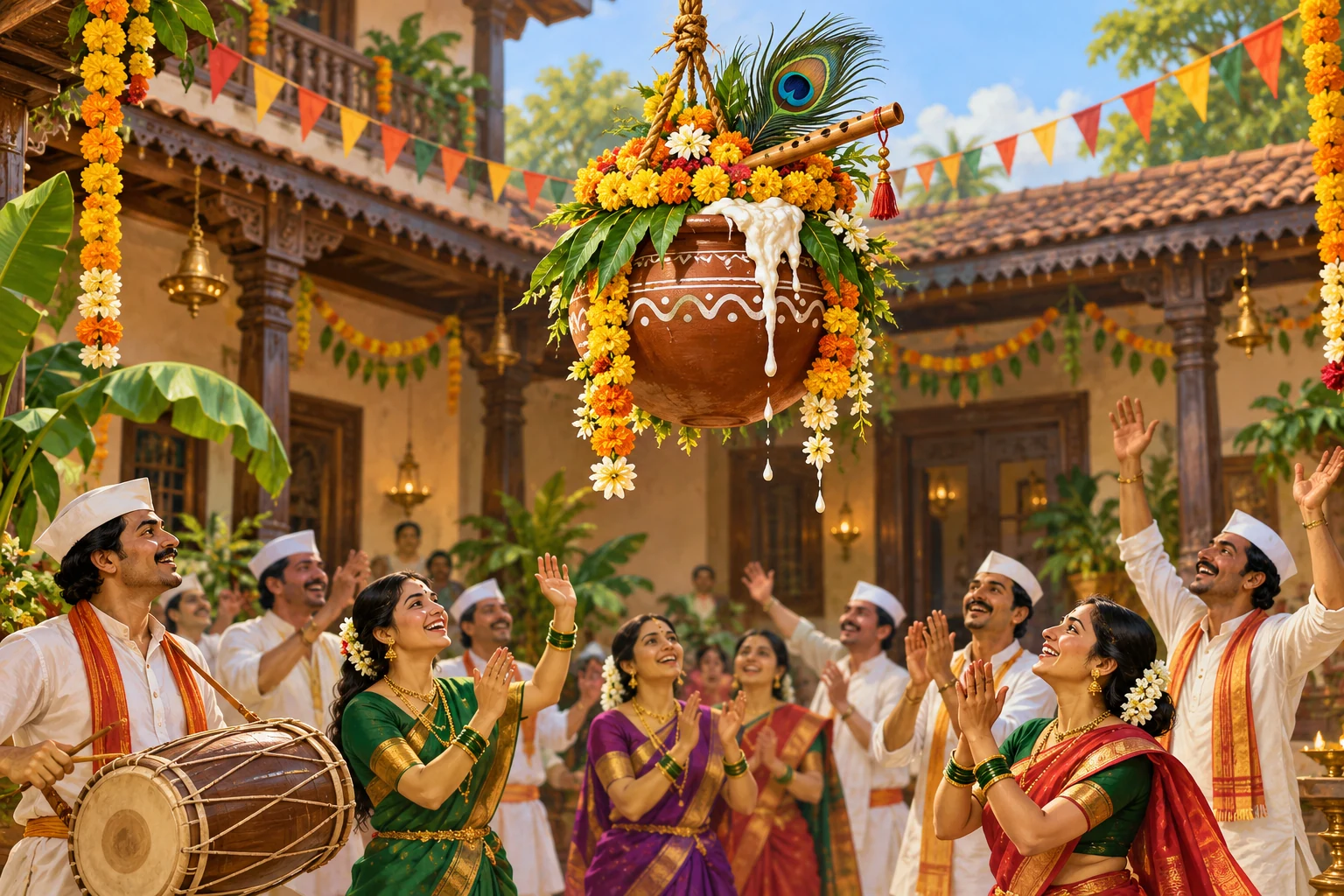
Dahi Handi (दही हंडी) is one of Maharashtra’s most recognisable public celebrations associated with Krishna’s birth festival. A decorated earthen pot, music and Govinda teams form its familiar public image. Gokulashtami worship at home has another pace, often centred on an image of Bal Krishna, offerings and family prayers. A calendar guide should distinguish these activities, since a birth observance, a fasting date and an organiser’s public event do not always share one timetable.
Janmashtami and Gopalkala in the calendar
Our August 2027 calendar lists Krishna Janmashtami fasting on Tuesday, 24 August. The Vaishnava Janmashtami and Gopalkala entries follow on Wednesday, 25 August. Keep the full label when making a reminder. The date of a particular Dahi Handi programme must come from its organiser. A general festival row does not establish a competition’s start time, venue or access arrangements. If two calendars differ, compare the tradition and location before assuming one entry is a typing error.
The Krishna story behind the handi
The hanging pot recalls stories of young Krishna and his companions reaching butter stored out of their immediate reach. Public Dahi Handi celebrations turn that familiar story into a team event. Maharashtra Tourism describes the Govinda groups and the gatherings associated with the festival in cities including Mumbai, Thane and Pune. The religious story and the modern event format can be discussed together without claiming that every household must organise a competition. For a child, a decorated pot and a story can explain the symbolism.
A simple home observance
Ask the household’s worship leader whether the family marks Gokulashtami, a midnight birth celebration, Gopalkala, or a combination of these. Set the prayer space and serving area before guests arrive. A Krishna image, flowers and the family’s customary offering may be sufficient for a modest gathering. Keep a list of who is bringing food so that perishable dishes do not arrive too early. If a cradle or decorative swing is used for an idol, place it on a stable surface away from children’s running space.
Food and sharing prasad
Curd, butter and preparations associated with Gopalkala have a place in the festival’s food traditions. Recipes and fasting rules differ, so ask what the household actually serves before buying ingredients. Keep dairy dishes cool until needed and tell guests when a preparation includes peanuts or other ingredients they avoid. The amount prepared should match the people expected. A symbolic offering can be small; the rest can be portioned for sharing. Use separate utensils for the offering and for food already being served to guests.
Watching a public celebration
Check the organiser’s announcement for the current year, especially the venue and any viewing restrictions. A forwarded poster may refer to another locality or an earlier programme. Decide where your group will stand and where you will meet afterward. Avoid crowding the performance area or standing beneath the handi. Leave access routes free for organisers and emergency staff. A spectator should not attempt to join a team during an event. Human pyramids involve serious fall risks and require organised training and safeguards beyond this article.
A family event without a pyramid
A home or housing-society gathering can focus on devotional songs, a Krishna story, a decorated handi and sharing food. Explain to children that a televised stunt is not a game to copy with chairs, balconies or improvised climbing. A ground-level symbolic activity can preserve the theme without recreating a competition. Agree on noise levels and timing with neighbours. Keep the end of the programme clear so that families know when children will return home and volunteers can clean the shared space.
Is a midnight prayer the public event time?
No. A household’s birth prayer and a public Dahi Handi programme are separate arrangements. Confirm each with the people organising it. Keep both reminders when the family wants to attend worship as well as a neighbourhood celebration on another part of the festival schedule.
Keep three separate reminders
Record the religious observance your family follows, any fasting arrangements, and the public programme you intend to attend as separate reminders. That avoids moving a temple visit because an afternoon event starts later. Our Marathi calendar guide explains festival labels and civil dates. For background, read Maharashtra Tourism’s Dahi Handi description. The featured image is an AI-generated cultural illustration of a handi and offerings, not a photograph of a competition or an endorsement of a particular organiser.