Makar Sankranti in Maharashtra: Tilgul, Haldi Kumkum and Traditions
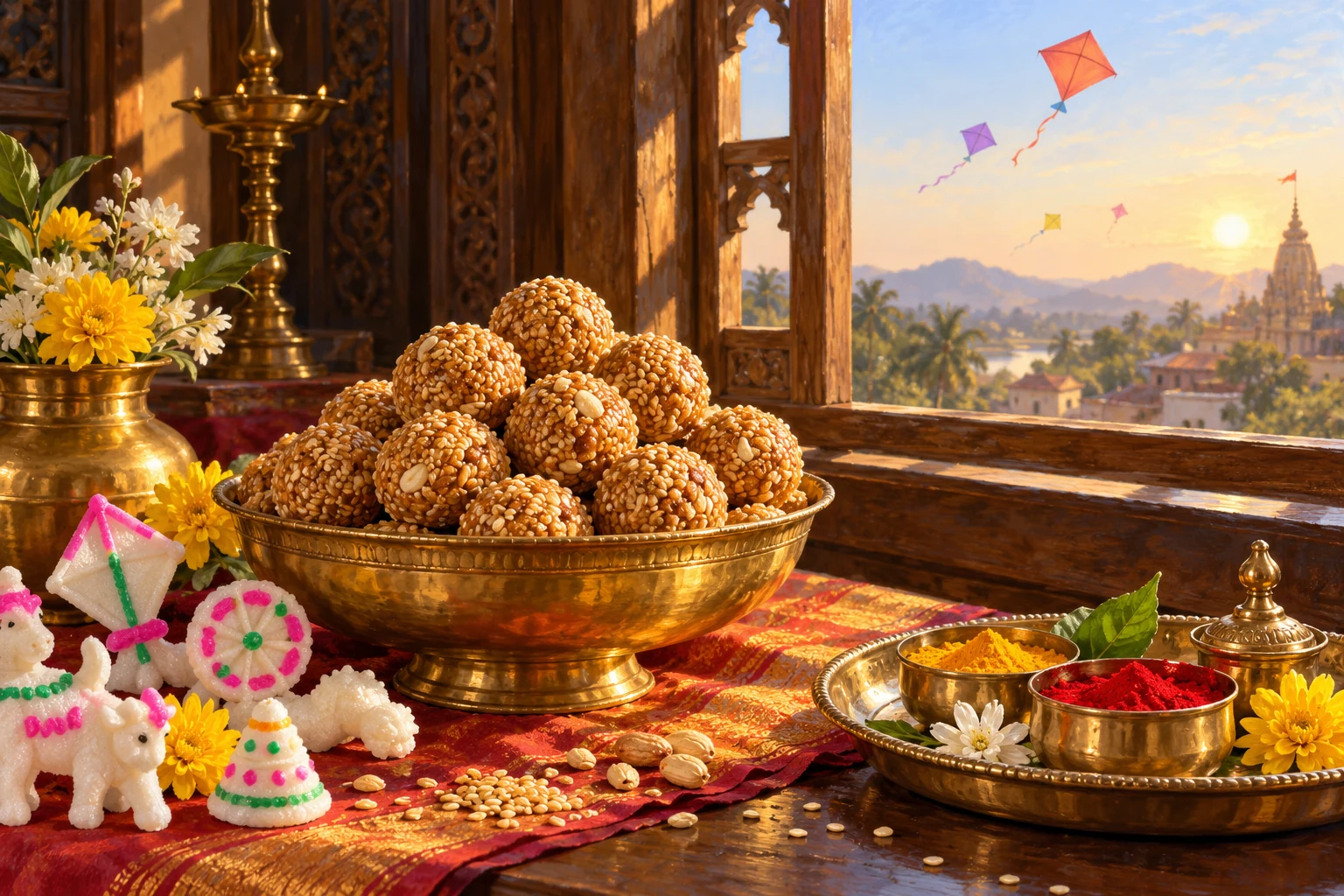
Makar Sankranti (मकर संक्रांत) is recognised in Maharashtra through tilgul, greetings and visits between families. The phrase “तिळगूळ घ्या, गोड गोड बोला” asks people to share sweetness in speech as well as food. A household celebration can be modest: a plate of sesame-jaggery sweets, a greeting to neighbours and time spent with relatives. The calendar still matters, because the festival date and any specified ritual period should be checked for the particular year.
The solar festival and its 2027 date
Makar Sankranti refers to the Sun’s entry into Makara. Our January 2027 calendar records it on Friday, 15 January, with Bhogi on 14 January and Sankranti Karidin on 16 January. Avoid assuming that a solar festival must have exactly the same civil date every year. The recorded auspicious period is 7:17 AM to 6:20 PM; verify the applicable location and tradition before treating that reference as a personal puja schedule. A social visit can be arranged separately from a ritual time.
Tilgul and a greeting that explains it
Tilgul sweets bring sesame and jaggery together in forms that differ between kitchens. Some households prepare laddoos, while others buy sweets or share another customary preparation. When introducing the festival to a child or a guest, explain the greeting before asking them to repeat it. Its everyday meaning makes the exchange understandable even to someone who does not speak Marathi. There is no need to attach an unsupported medical claim to the ingredients. Offer the food as a festival sweet and let guests choose their portion.
Organise a small haldi-kumkum gathering
Haldi-kumkum visits are associated with Sankranti customs in many Maharashtrian homes. Ask the person hosting which date and format they follow, since invitations may be spread across more than one day. Keep turmeric and kumkum in separate, clearly placed containers, and arrange seating before visitors arrive. Confirm whether small gifts are part of the household practice rather than assuming an expensive exchange is expected. A simple invitation should state the time and address and give guests room to decline or visit briefly.
Food preparations that fit the household
Gul poli and tilgul are familiar festival foods, but the meal need not reproduce every dish on an online list. Start with the family’s own recipe and the number of people expected. Tell guests when sweets contain sesame, nuts, wheat or dairy. Store different batches separately and keep a note of when they were prepared. If children are helping, let them arrange cooled sweets or pack boxes while an adult handles hot jaggery. Choose containers that close properly before sending food with someone travelling.
Bhogi and the neighbouring dates
The January calendar places Bhogi immediately before Sankranti. Keep the names separate when discussing the meal or worship your family observes. A recipe associated with Bhogi should not be moved to another day merely because all three dates fall within one family gathering. Ask older relatives which preparations belong to which occasion and write down their wording. Those notes can preserve a household practice more accurately than a generic claim that every person in Maharashtra celebrates the entire period in exactly the same way.
Kites and shared outdoor space
Kite flying appears in some Sankranti celebrations, although it is not every household’s main activity. Use an open, suitable space and follow current local restrictions on equipment. Keep children away from terrace edges, roads and power lines, and do not retrieve a kite from a dangerous location. Be considerate of birds and neighbours when planning an outdoor gathering. People who prefer not to fly can join the food and greeting exchange. The calendar’s observance date does not require a particular recreational activity.
Can the greeting be shared later?
Families often exchange greetings during visits arranged around work and travel. Confirm a suitable time with the host. A later social visit should not be described as changing the calendar’s Sankranti date; the greeting and the dated religious observance serve different purposes.
Keep the date separate from the custom
Recipes, greetings and reusable serving items can remain in the family’s festival notes from one year to the next. The civil date, ritual window and any local programme need a fresh check. Our calendar-reading guide explains date labels. Cultural background is available from Maharashtra Tourism’s Makar Sankranti page; use the year-specific calendar for the date. The featured tilgul still life is an AI-generated illustration and does not show an actual family’s offering.