Ganesh Chaturthi in Maharashtra: Home Puja and Festival Guide
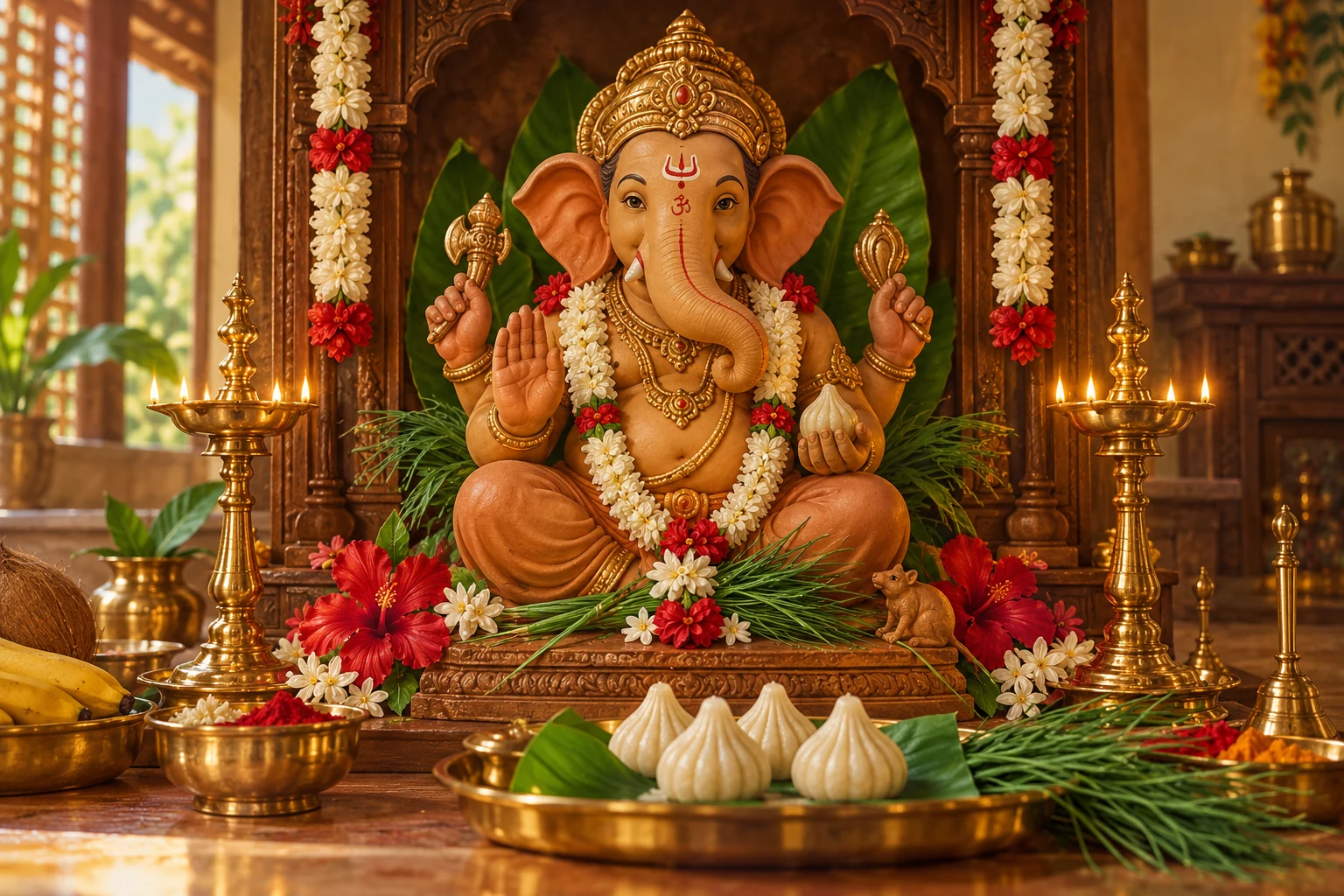
Ganesh Chaturthi (गणेश चतुर्थी) brings Ganpati into homes and public mandals across Maharashtra. A small household shrine and a neighbourhood pandal can look very different, yet both centre on welcoming Ganesha and sharing worship. For a family preparing its first celebration, the useful questions are practical: when to bring the idol home, what the household custom requires, who will prepare the offerings, and when the farewell will take place.
The date and the length of the celebration
The festival falls on Bhadrapad Shukla Chaturthi. Our September 2027 calendar records Ganesh Chaturthi on Saturday, 4 September, and Anant Chaturdashi on 14 September. These dates identify the observances; they do not supply a universal installation muhurat. Check the local Panchang for the timing you follow. Families keep Ganpati for different periods, including a day and a half or several days. Decide the household’s farewell date before organising meals and visitors.
Prepare a manageable home shrine
Choose a stable place where the idol can remain undisturbed. Leave room for someone to offer flowers and perform aarti without reaching over a flame. A washable cloth, an offering plate and a separate place for used flowers make daily care easier. Before shopping, ask the person leading the puja which items are actually needed. Durva, flowers, a lamp and naivedya are familiar offerings, but a long internet shopping list should not replace the family’s practice. Use decorations that can be removed without damaging the idol.
Keep the daily routine clear
Many households organise morning or evening worship around work and school. Agree on a time when family members can join, and keep the words of the familiar aarti available for anyone learning them. Visitors may arrive while food is being prepared, so place drinking water and serving plates away from the puja space. Explain gently whether guests should wait until naivedya has been offered. Children can help arrange flowers or distribute prasad with supervision. They do not need to handle a lit lamp to take part.
Modak and other offerings
Ukadiche modak, made with a rice-flour covering and coconut-jaggery filling, is closely associated with Ganpati worship in Maharashtra. Other offerings vary between homes. Plan a quantity that can be prepared and shared fresh rather than measuring devotion by the size of the spread. Tell guests when sweets contain nuts, dairy or other ingredients they avoid. Keep the offering plate separate from food being tasted during cooking. If relatives bring additional prasad, label and store it sensibly so it can be shared without confusion.
Home worship and public mandals
Public celebrations add music, decoration and neighbourhood gatherings to the festival. They have a different rhythm from a home puja. If visiting a mandal, check its own arrangements before setting out; photographs of a previous year do not establish this year’s queue or opening hours. Keep a meeting point for your group and avoid blocking entrances while taking pictures. A household celebration can remain quiet and small even when nearby streets are busy. There is no need to reproduce a large pandal inside a flat.
Plan visarjan before the final evening
Ask the local authority or organiser about the designated immersion arrangement and collection of offerings. A small clay idol and removable decorations make the farewell easier to manage. Separate plastic, cloth and other decorations from flowers before leaving home. Do not assume that anything labelled biodegradable belongs in a river or the sea. The procession route, vehicle access and collection arrangements need current local confirmation. Share the return plan with older relatives and anyone who will not join the procession.
Can the family keep a short celebration?
Yes. Follow the duration agreed within the household and arrange the farewell accordingly. Tell visitors which days Ganpati will be at home. Keeping that plan clear is more helpful than assuming that every family follows the final public immersion date.
Use the calendar alongside your household custom
Write down the installation date, the chosen farewell date and who is responsible for daily offerings. Keep any priest’s timing note with its city and year. The calendar-reading guide explains why a tithi label and a festival date can require separate reading. For cultural background, see Maharashtra Tourism’s Ganesh Chaturthi overview. The featured artwork on this page is an AI-generated devotional illustration, not a photograph of a particular shrine.